


Pollinators
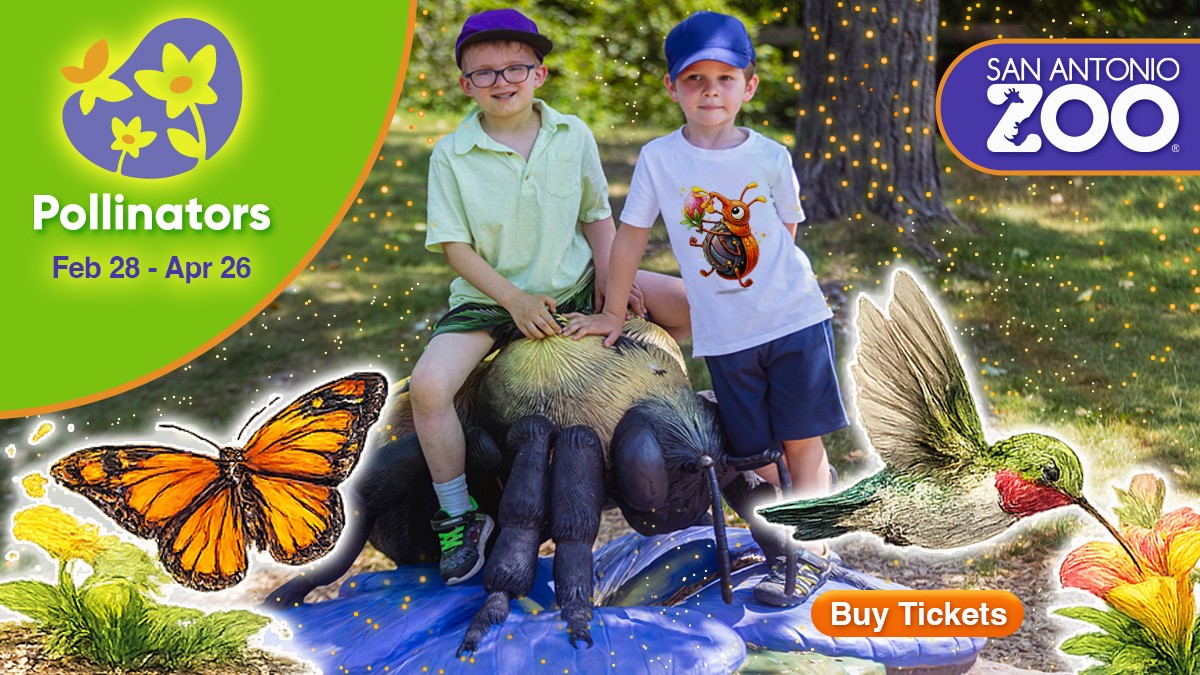
Pollinators are animals that transfer pollen between flowers, facilitating plant reproduction, seed/fruit production, and supporting ecosystems that contribute to our food supply. Declining populations of pollinator animals are facing threats such as habitat loss and the use of pesticides. These species require targeted conservation efforts.
This spring at San Antonio Zoo, guests learn more about these essential animals. Guests can climb on giant pollinator sculptures throughout the park as they learn more about the importance of these pollinators in our world.
Displays include*:
Mexican Long-Tongued Bat - pollinator of Saguaro cactus.
Chocolate Midge - pollinators of cocoa to make chocolate.
Fig Wasp - pollinators of figs.
Fly - pollinators of a wide range of plants, like carrots, onions, strawberries, and numerous wildflowers.
Yellow Jacket - pollinators of flowering plants, fruits, and vegetables.
Mosquito - pollinators of orchids, goldenrods, grasses, and flowers in the daisy and rose families.
Black & White Ruffed Lemur - pollinators of the traveler's palm.
Hummingbird Hawk Moth - pollinators of honeysuckle, bee balm, phlox, lilac, zinnias, petunias, and evening primrose.
Pollinator Weevil - pollinators of tropical plants, like palms, cycads, nutmeg, and orchids.
Hoverfly - pollinators of dill, fennel, yarrow, daisies, and asters.
Honeycreeper - pollinators of native Hawaiian plants with red, orange, or purple, tubular flowers rich in nectar.
*Selection of climbable statues is subject to change.