How San Antonio Zoo Uses Environmental DNA to Help Save Endangered Species
When you picture scientists studying wildlife, you might imagine binoculars, butterfly nets, or scuba gear. At San Antonio Zoo, the reality is even cooler: teams are exploring hidden worlds using invisible clues left behind in water. That clue is environmental DNA, or eDNA, and it’s unlocking mysteries about some of the rarest creatures in Texas and the world.
Researchers are focusing on the Edwards Aquifer, a massive underground water system stretching beneath much of Central Texas. The aquifer is one of the most diverse subterranean ecosystems on Earth, and yet, most of its residents are species few people have ever seen. We’re talking blind catfish and salamanders that live their entire lives in pitch-black caves and water-filled tunnels. With eDNA, conservationists are finally able to find out where these secretive species live and how to protect them.
What Is Environmental DNA?
Every living organism constantly sheds DNA into its environment. Fish shed scales, salamanders lose skin cells, and even the smallest invertebrates leave traces of genetic material floating in the water. That’s environmental DNA.
By filtering water and analyzing those fragments, scientists can detect which species are present in an ecosystem, even if the animals themselves stay hidden. Think of it as forensic science for nature. Instead of tracking animals with flashlights in caves, conservationists simply let the water tell its story.
Why Focus on the Edwards Aquifer?
The Edwards Aquifer is more than just a water supply for millions of Texans. It’s home to one of the richest collections of subterranean species anywhere on Earth. Imagine rivers running through limestone caverns, springs bubbling up from deep underground, and pools so dark that the creatures living there never develop eyesight.
Unfortunately, this fragile ecosystem faces growing threats. Urban development, groundwater pumping, and pollution all put pressure on the aquifer and its unique residents. That makes the work happening at San Antonio Zoo urgent and essential. By surveying wells, springs, and caves, researchers are gathering baseline data on species distributions before it’s too late.
Meet the Blind Catfish and Salamanders
The stars of this study are some of the most elusive species in North America:
- Mexican Blindcat (Prietella phreatophila) – A pale, ghostly fish that was once thought to live only in Mexico until researchers confirmed its presence in Texas.
- Widemouth Blindcat (Satan eurystomus) – Yes, its scientific name is Satan. This rare catfish is found only in the Edwards Aquifer, gliding silently in underground rivers.
- Toothless Blindcat (Trogloglanis pattersoni) – Another aquifer specialist with adaptations for life in total darkness.
And then there are the salamanders:
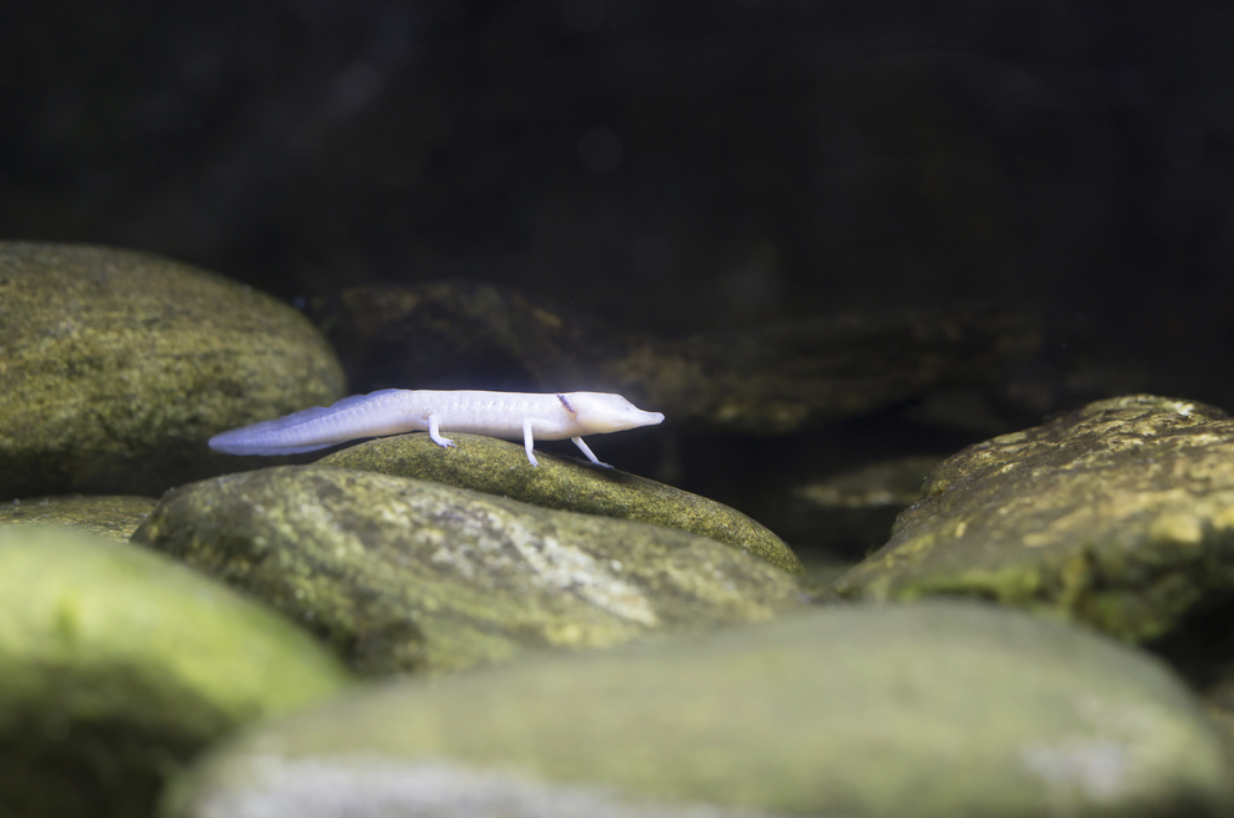
- Texas Blind Salamander (Eurycea rathbuni) – With its frilly gills and sightless eyes, it’s a true icon of Texas aquifers.
- Blanco Blind Salamander (E. robusta) – Extremely rare and known from very few sites.
- San Marcos Salamander (E. nana) – Tiny, but a big deal when it comes to conservation.
- Several undescribed salamander species – That’s right. There are species here that scientists haven’t even formally named yet.
On top of that, the eDNA surveys are also detecting invertebrates, including federally listed species. Together, these results build a clearer picture of the aquifer’s hidden community.
How Sampling Works
You might think sampling underground creatures would involve scuba divers exploring flooded caves. While that sometimes happens, eDNA makes things a lot simpler. Here’s how the process works:
- Collecting water – Researchers pump small amounts of water from wells, springs, or pools in caves.
- Filtering – The water is pushed through extremely fine filters that trap stray DNA fragments.
- Preserving – Filters are carefully sealed and preserved for shipment.
- Analyzing – A specialized lab in the UK extracts and sequences the DNA, comparing it against global databases.
This method is far more efficient than traditional surveys. Instead of hoping to catch a glimpse of a blind catfish in the dark, researchers can confirm its presence from DNA floating in the water. Even better, eDNA can detect organisms across a wider area since DNA travels downstream.
Why This Approach Is Revolutionary
Environmental DNA changes the game for several reasons:
- Non-invasive. No need to disturb sensitive habitats or capture fragile animals.
- Broad reach. DNA drifts far from its source, so researchers can detect species even if they’re hiding in inaccessible areas.
- Time-efficient. Collecting a few liters of water is faster than weeks of surveys.
- Data-rich. eDNA metabarcoding not only confirms target species but also reveals entire communities.
For the aquifer’s blind catfish and salamanders, these advantages mean a better chance of survival. Conservationists now have concrete evidence of where species live and how populations overlap with human activity.
The Challenge of Access
As advanced as eDNA is, it still requires boots on the ground, or rather, pumps on the wells. Identifying sampling sites is a huge hurdle. Most wells are privately owned by farmers, municipalities, or government agencies, which means obtaining permission is critical.
Thankfully, collaborators at UT Austin created a detailed database of candidate wells, complete with landowner information. Using this resource, San Antonio Zoo teams have been steadily gaining access to key wells while expanding sampling into recharge zones and natural springs. Building relationships with landowners is just as important as the science itself. Without willing partners, those DNA clues would remain locked underground.
What These Discoveries Mean
So why does it matter if we know where a blind salamander or catfish lives? The answer is bigger than any one species. Aquifer organisms are indicators of water quality and ecosystem health. If they disappear, it often signals trouble for the entire aquifer system, including the water millions of people rely on.
By mapping species distributions, San Antonio Zoo is:
- Identifying strongholds where rare species are still thriving.
- Spotting areas where invasive species might threaten natives.
- Establishing baseline data for long-term monitoring.
Informing policy and conservation decisions that protect aquifer resources.
Ultimately, these efforts safeguard both wildlife and human communities. Healthy aquifers mean cleaner water and stronger ecosystems across Central Texas.
A Glimpse Into the Future
The beauty of eDNA is that it keeps getting better. As databases grow and sequencing technology improves, conservationists will be able to identify species more accurately and even estimate population sizes. Future studies may uncover entirely new species lurking in the Edwards Aquifer.
And who knows? The next discovery might be a catfish or salamander nobody has ever seen in person, identified only by the DNA it left behind. That’s the magic of this technology.
Final Thoughts
By combining cutting-edge science with old-fashioned fieldwork, San Antonio Zoo is leading an effort to uncover the secrets of the Edwards Aquifer. Environmental DNA is the key that opens that world, giving conservationists the information they need to protect it.
The next time you think about wildlife conservation, remember that sometimes it isn’t binoculars or nets that make the difference. Sometimes, it’s a few drops of water and the invisible code of life swirling within it.
Want to help make a difference? By becoming a San Antonio Zoo Member, you’re directly supporting important conservation projects like this one while also enjoying unlimited admission and other perks all year long. It’s an easy way to protect wildlife while creating unforgettable memories.